
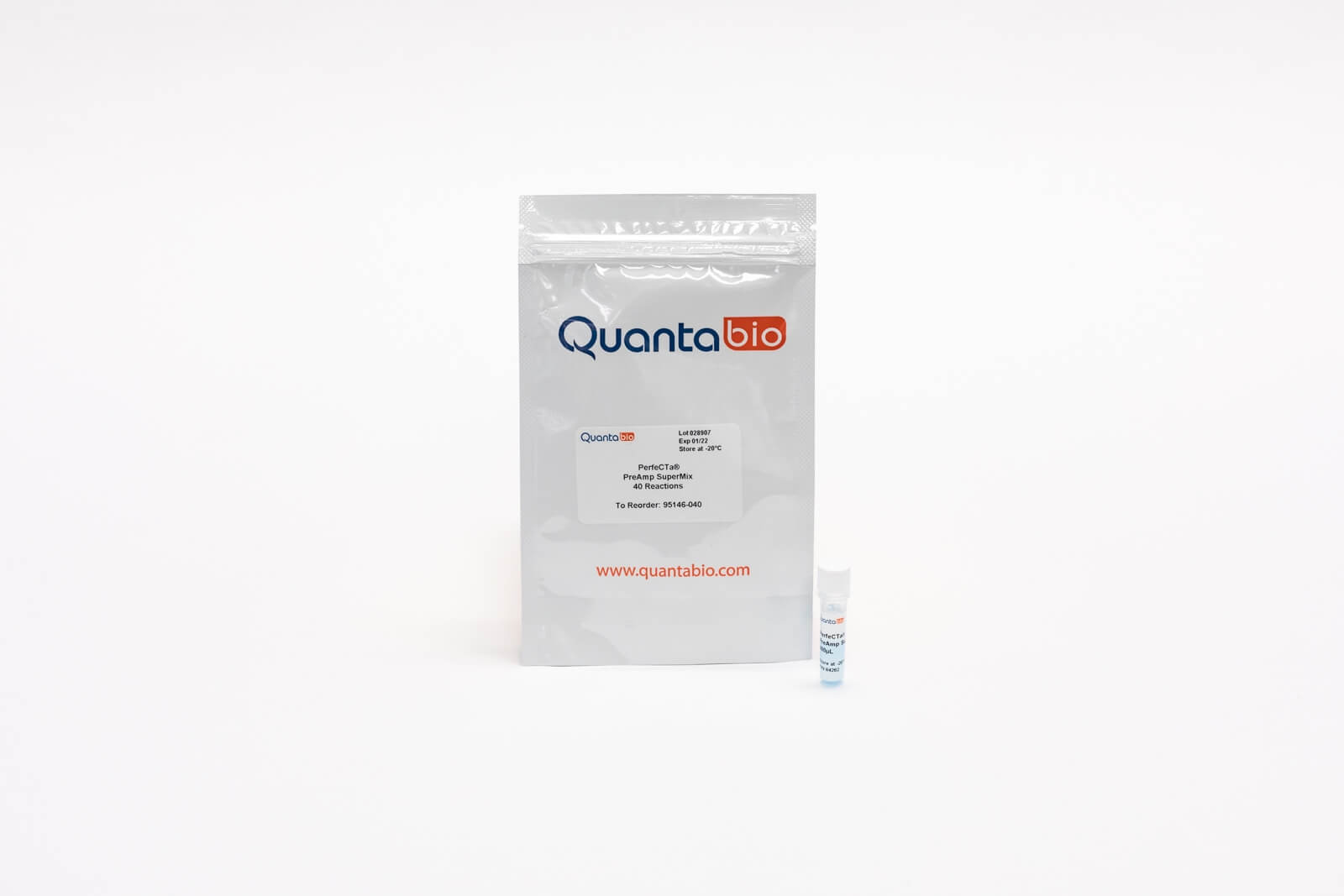
PerfeCTa PreAmp SuperMix
- Unbiased, linear pre-amplification of up to 100 DNA targets
- 5x concentrated SuperMix maximizes sample input volume with dilute cDNA templates
- Superior assay sensitivity and specificity with ultrapure AccuStart II enzyme technology – maximum-yielding Taq DNA polymerase mutant controlled by stringent, multi-epitope antibody hot-start
- User-friendly inert AccuVue plate loading dye provides visual confirmation of reagent addition
- Supports efficient vortex mixing.
PerfeCTa PreAmp SuperMix is intended for molecular biology applications. This product is not intended for the diagnosis, prevention or treatment of a disease.
PerfeCTa PreAmp SuperMix
Description
PerfeCTa PreAmp SuperMix is a 5x concentrated, ready-to-use reaction cocktail for unbiased, selected enrichment of target sequences from limiting amounts of starting material for downstream gene expression profiling or targeted re-sequencing. It contains all the necessary components, except primers and templates. The 5x concentrated SuperMix allows addition of higher template volumes when working with low concentration samples, and/or reduced reaction volumes. Inclusion of inert light blue tracer dye helps visualize small reaction volumes and ensure accurate pipetting. PerfeCTa PreAmp SuperMix delivers unbiased pre-amplification of up to 100target sequences from as little as 100
pg of total RNA. It is compatible with both TaqMan® 5’-nuclease probes or dS-DNA binding dye (i.e. SYBR® Green I) qPCR detection chemistries.
Details
5X reaction buffer containing optimized concentrations of MgCl2, dNTPs (dATP, dCTP, dGTP, dTTP), AccuStart™ II hotstart Taq DNA polymerase, inert AccuVue™ plate loading dye, and stabilizers.
 Powered by Bioz
PerfeCTa PreAmp SuperMix demonstrated lower overall efficiency than our current reagent, with an average efficiency of 66% versus 70%. In addition, it showed greater variability across several targets. Although the 5X concentration allowed for increased template input and the potential for improved signal, these advantages were ultimately outweighed by the reagent’s reduced performance.